
The central condition for immediate loading is primary stability of the implants — enough bone of reasonable quality for the implants to “grip” firmly on the day they are placed. Age, controlled blood pressure or controlled diabetes are not obstacles. Heavy smoking, uncontrolled diabetes, intravenous bisphosphonates or radiation to the jaw need assessment, and sometimes a different protocol.
Suitable in most cases
- Most or all teeth missing in a jaw
- Teeth loose from advanced gum disease
- Broken or worn teeth, or retained roots
- A removable denture that will not stay put or causes sores
- Age 50, 60, 70 and 80 — when general health is reasonable
Suitable — after preparation or with adaptation
| Situation | What we do |
|---|---|
| Thin bone at the back | Tilted implants (All-on-4), longer implants, or a targeted bone graft |
| Diabetes | Controlled (HbA1c in a range your physician approves, usually up to about 8%) — we proceed; uncontrolled — stabilise first with your physician |
| Smoking | Lowers success rates; stopping or cutting down around surgery makes a real difference |
| Active gum disease | Extractions remove the source; hygiene is a condition of long-term success |
| Tooth grinding | Planning with more implants, a hybrid bridge and a night guard |
| Fear and anxiety | Sedation, a detailed explanation in advance, and a patient who knows what is happening at every moment |
When we will not load immediately
- When implant stability on the day of surgery is insufficient — we switch to the delayed protocol, without unnecessary risk
- Intravenous bisphosphonates or past radiation to the jaws — individual assessment required
- Uncontrolled systemic disease or active chemotherapy
- Inability to maintain hygiene or attend check-ups
Two things we do not do: rule people out by age, or accept “you have no bone” from someone who never saw a CT. We decide on a scan, not on a hunch.
How we find out
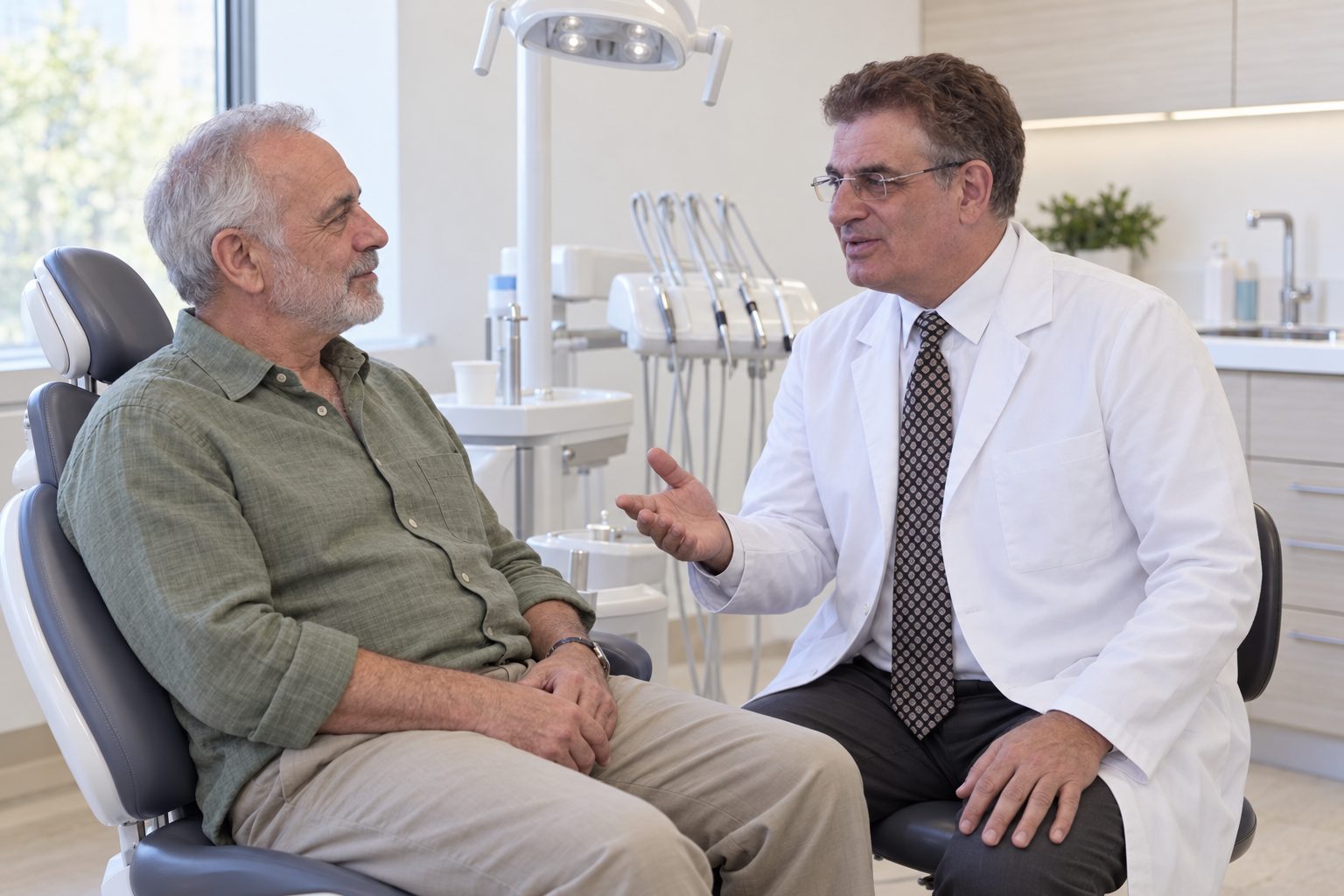
A first consultation of about 45 minutes: a conversation about what bothers you and what matters to you, a clinical exam, a reading of your 3D CT scan (bring an existing one, or get a referral to an imaging centre — usually a few days before) and a health questionnaire. By the end you will know whether you are a candidate, for which protocol, and what the stages are.
Frequently asked questions
I have diabetes. Is that a problem?
Controlled diabetes is not an obstacle. Uncontrolled diabetes raises the risk of infection and implant failure — we will ask for it to be stabilised with your physician first. A recent HbA1c test is part of the assessment.
I smoke. Does that rule me out?
It does not rule you out, but it lowers success rates and slows healing. Stopping — even just around surgery and during the healing months — significantly improves the odds.
I was told I have no bone. Is that final?
Almost never. Tilted, long or short implants and targeted bone grafts solve most cases. The CT scan decides, not a guess.
I take osteoporosis medication. Can I have implants?
It depends on the drug and how long you have taken it. Oral bisphosphonates for a short period — usually possible with care; intravenous, or denosumab injections (Prolia) — needs a thorough assessment and coordination with your physician. Bring your medication list to the consultation.
I am very afraid of dentists.
That’s a good reason to choose a short protocol with one surgery. It can be done under sedation with an anaesthetist, and a detailed explanation beforehand removes most of the anxiety. You set the pace.
I have high blood pressure. Is that a problem?
Blood pressure controlled by medication — no. On the day of surgery you take your pills as usual, have breakfast, and we measure before we start. Blood thinners (Coumadin, Eliquis and similar) — in most cases they are not stopped; we check the INR or coordinate skipping a single dose with your physician and control bleeding locally. Never stop a blood thinner on your own before surgery. Bring your medication list.
I have had a denture for 20 years. Is the bone still there?
Less than there was, for sure. A denture presses on the ridge and speeds up resorption, and after 20 years the lower jaw is sometimes very thin. But that is exactly where the tilted implants of All-on-4 use the bone that remains at the front. We have seen “no bone” jaws get a fixed bridge. The CT will tell.
I’m pregnant.
Then we wait. Not because of the implant itself but because of the scan, the anaesthesia and the medication afterwards — three things you don’t do in pregnancy without urgent need. The consultation can happen now, on an existing scan, and we plan for after the birth.
Want to know if immediate loading is right for you?
A first consultation at any network clinic includes an exam, a reading of your scan and an explanation of the options — no obligation.