Clinic network · Oral rehabilitation · Immediate loading
Fixed teeth in one day — immediate-loading implants and oral rehabilitation, near you
Kayama Dent is a network of oral-rehabilitation clinics: five clinics — Tel Aviv, Bnei Brak, Kfar Saba, Netanya and Haifa — working to one protocol of guided implants and immediate loading, under the medical direction of Dr. Doron Koter. You leave the clinic with fixed teeth in your mouth — not a removable denture, and not months of waiting.
5 clinics, from Haifa to Tel AvivTel Aviv · Bnei Brak · Kfar Saba · Netanya · Haifa
One protocol across the networkCT-based digital planning and a surgical guide — at every clinic
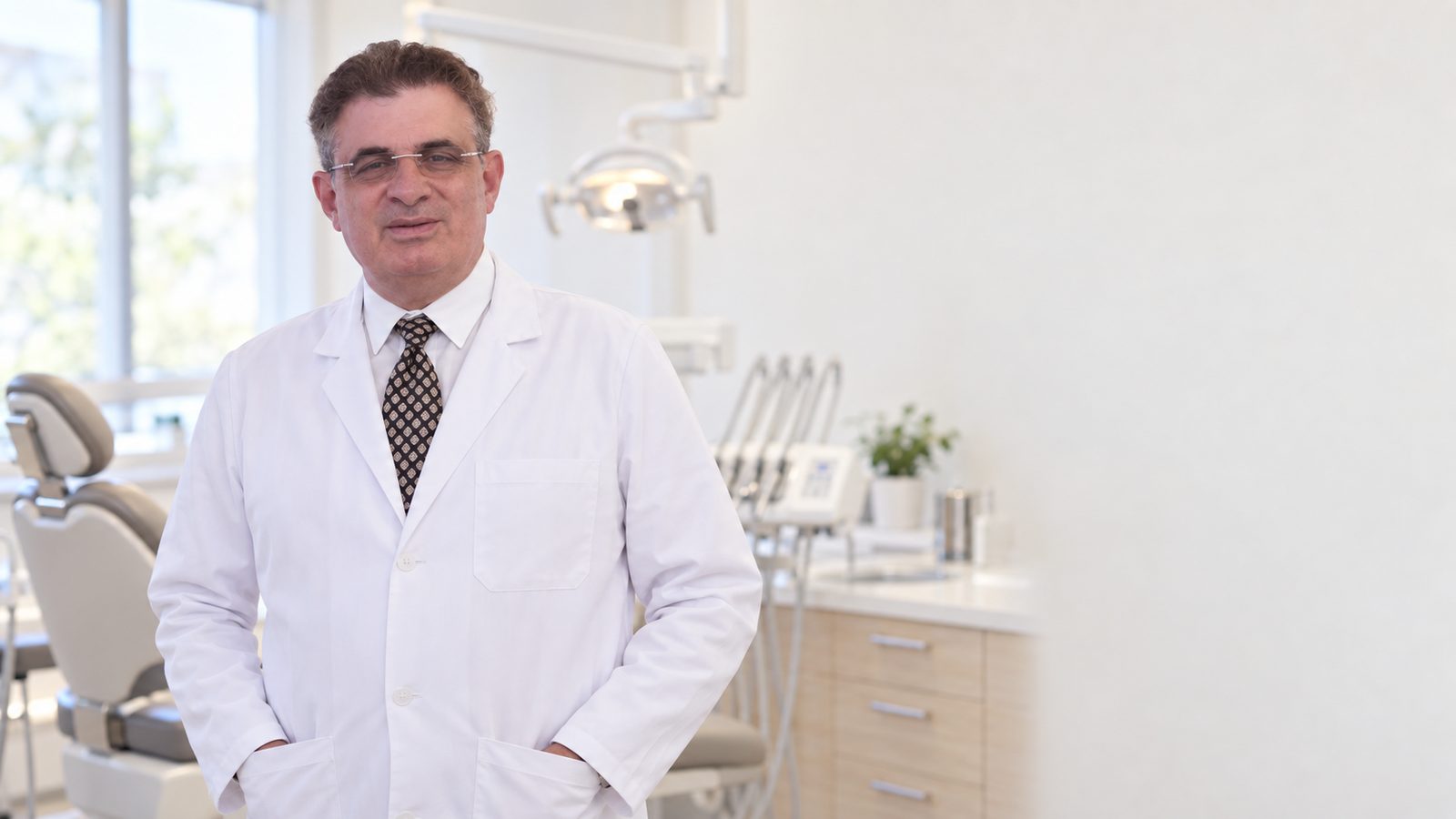
Medical director: Dr. Doron KoterOral rehabilitation, implants and immediate loading
One call centre for all clinicsOne number, one booking, the same care
Our clinics
The same protocol, the same digital planning and the same warranty at every one of them. Choose the one nearest you — the first consultation, the surgery and the check-ups happen there.
Tel Aviv
158 Menachem Begin Rd., 4th floor, clinic 404, Tel Aviv
The warranty is subject to the warranty terms provided in writing with the quote, before treatment begins.
Is this for me?
Most people who call us describe one of four situations.
My denture moves and embarrasses me
A removable denture that won’t stay put when you eat or speak, with adhesive or without. It can be locked onto two implants, or replaced with a fixed bridge — depending on the bone and the budget.
My teeth are loose or broken
Advanced gum disease, worn teeth or leftover roots. Usually we can extract, place implants and fit a provisional bridge on the same day — provided the bone holds. The CT says that, not us.
I am missing a few teeth
A single implant or several, planned on the CT and placed through a guide — usually without a large incision or stitches. 20–40 minutes per implant.
I dread a long process
You don’t want months without teeth or with a temporary denture. That’s what the immediate-loading protocol is for — one operation, teeth the same day, when the bone allows.
What we do
Immediate loading — teeth in a day
All-on-4, All-on-6 and full-arch rehabilitation: implants and a fixed provisional bridge on the same day, and after 3–6 months of healing the permanent zirconia bridge. This is what most of our patients come for.
Guided dental implants
Digital planning of every implant position on your CT, and a printed surgical guide that steers the placement. Usually without a wide incision, so less swelling.
How it works — five steps
Consultation & exam
About 45 minutes: a conversation, a clinical exam and a reading of your CT (referral to an imaging centre if you don’t have one). You leave with a picture of where you stand, your options and a written quote.
Digital planning
Without you present. Every implant is planned on a computer according to the bone, the nerves and the teeth that will be built on it; the guide and the provisional bridge are printed from the plan.
Treatment day
Extractions (if needed), implants placed through the surgical guide, and a fixed provisional bridge — the same day.
Supervised healing
3–6 months while the implants fuse with the bone. Check-ups after one week, one month and three months — at your clinic, with one contact person.
The permanent restoration
Digital scan and fitting of the permanent bridge — zirconia or hybrid — for function and aesthetics.
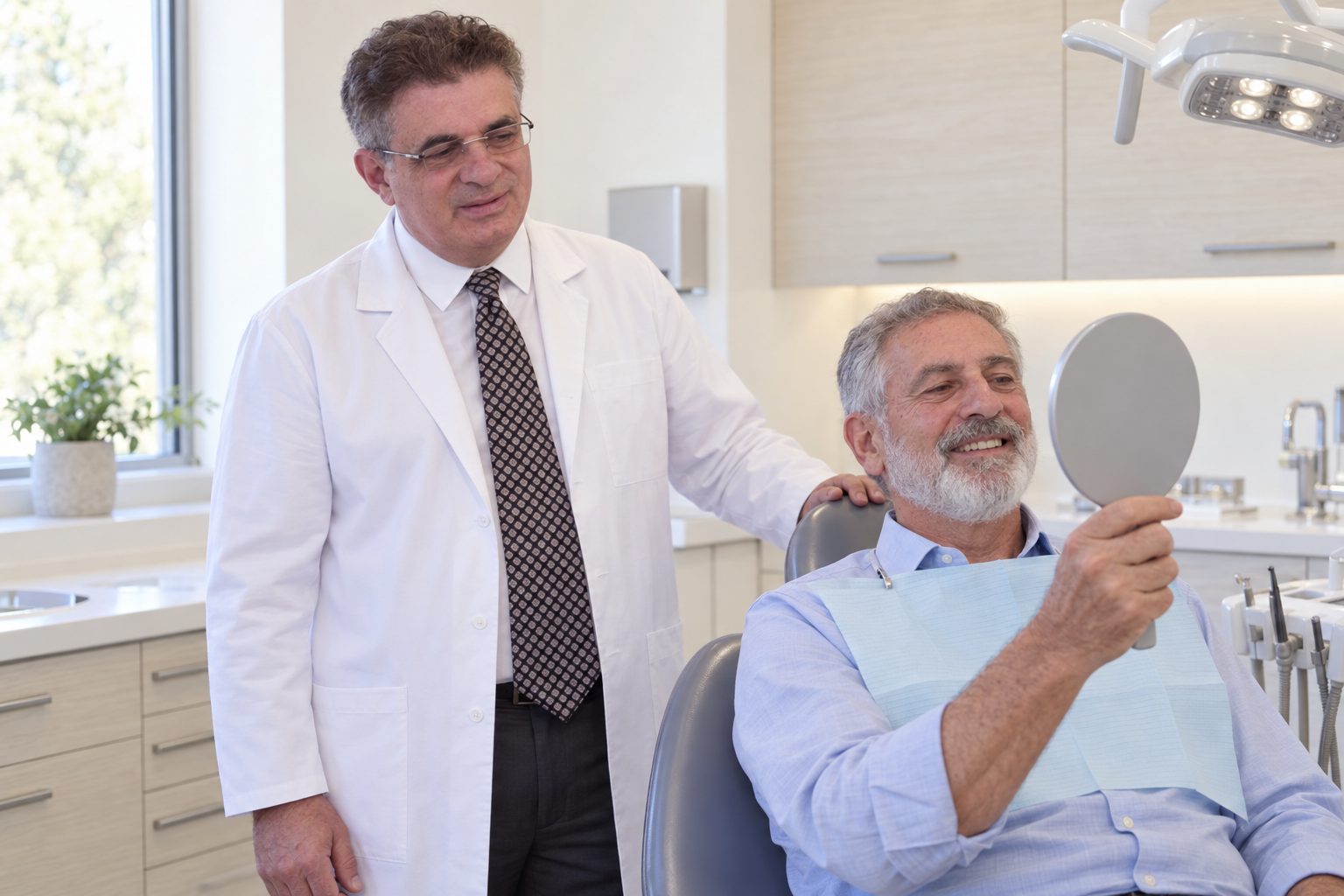
One thing will not happen here: we will not promise you “teeth in a day” before we have measured implant stability on the day of surgery. In most cases it works out. In the minority — we switch to the delayed protocol, and we tell you that up front.
One network, one standard
Five clinics, one protocol
Tel Aviv, Bnei Brak, Kfar Saba, Netanya, Haifa. Same equipment, same stages, same check-up schedule. Written down, and not dependent on who’s on shift.
Medical director — Dr. Doron Koter
DMD (Doctor of Dental Medicine), a dental-school graduate. A dentist focused on oral rehabilitation and implants. He sets the network protocol and follows the complex cases at every clinic.
Results
Frequently asked questions
What exactly is “teeth in a day”?
It’s the everyday name for immediate loading. In the morning the implants go in, and on the same day — once we’ve measured that each one has gripped firmly enough — a provisional bridge is screwed onto them. It’s fixed, not removable, and you walk out of the clinic with it in your mouth. That evening you’re already eating something soft. The provisional bridge is reinforced acrylic and is meant for the healing months, usually 3–6, until the implants fuse with the bone. Then we scan the jaw and make the permanent bridge, in zirconia or hybrid. Worth knowing in advance: “the same day” depends on the stability we measure during surgery. In most cases it works out; in a minority we don’t load, and you get a different temporary solution. We tell you that at the consultation, not on the day of surgery.
Who treats me — and who is responsible?
The network team at the clinic you chose — the implant surgeon and the restorative dentist — carries out the implant surgery and the restoration to the protocol, on the same plan approved at the planning centre. In other words, the person placing the implants and the person building the teeth on them work on the same CT and the same plan, and the one building the teeth decided where the implants would sit before anyone drilled. The medical director, Dr. Doron Koter, follows the complex cases at every clinic, and you can ask for a consultation with him through the call centre. The warranty is the network’s, not one dentist’s — if you’ve moved house or your dentist has changed, the warranty stays. Its terms are in the document you get with the quote.
How much is the first consultation?
The cost of the consultation, and exactly what it includes, is something the call centre tells you when you book — it isn’t a sum we hide, it’s simply given over the phone. What you get: a meeting of about 45 minutes with a clinical exam, a reading of your CT scan (if you have a recent one, bring it; if not, we give you a referral to an imaging centre and you come with the scan) and an explanation of the options. You leave with a written quote for the treatment itself. That quote is itemised and final: a stage that’s been priced doesn’t get more expensive along the way, and if surgery reveals something that wasn’t in the plan, we tell you before we continue. There’s no pressure to decide on the spot. Plenty of people take the quote home and come back a week or two later with questions.
Where are the network’s clinics?
Five clinics. In the centre: Tel Aviv (the main clinic, 158 Menachem Begin), Bnei Brak (7 HaRav Kook), Kfar Saba (119 Tchernichovsky) and Netanya (4 HaTzoran). In the north: Haifa, in Hadar (1 Sokolov). They all work to the same protocol, and you have the first consultation at the clinic nearest you — the surgery and the check-ups too. Booking for all of them is through one call centre, +972-52-592-6961, by phone or WhatsApp; say which city and you get an appointment there. Opening hours differ between the clinics, which is why they’re given when you book rather than on the site. And if you started at one clinic and it’s easier to carry on at another — your file, CT and plan are shared across the network, so that’s possible.
Is the treatment the same at every clinic?
Yes, and it isn’t a slogan — it’s what the network is built on. Every clinic works to one clinical protocol written by the medical director: the same criteria for immediate loading, the same stages, the same patient instructions and the same check-up schedule (one week, one month, three months, then yearly). The planning and scanning equipment is identical. Complex cases are planned at the network planning centre, and from there the surgical guide and the provisional bridge come to the clinic — so what’s done in Haifa is planned in the same place as what’s done in Tel Aviv. Dr. Koter follows those cases at every clinic. The quote is uniform too: same treatment, same price, in every city.
I’m 75. Is it too late?
No. Age on its own doesn’t rule anything out, and patients in their 70s and 80s have immediate loading with us as a matter of routine. What does decide: general health and the bone. At this age we ask more about medication — blood thinners, osteoporosis drugs, diabetes control — and sometimes we coordinate with your GP first. Bring a list of your medication to the consultation. As for bone, anyone who’s worn a denture for years has usually lost some of it, but that’s exactly what tilted implants are for; the CT will tell us what’s there. There’s another side too: at 75, living with a denture that moves isn’t something you have to put up with “because it’s not worth it any more”. The surgery itself is under local anaesthesia, and most older patients go through it just like the younger ones.
Can I bring someone to the consultation?
Please do — it’s a good idea. A partner, a grown-up child, a friend — someone who’ll remember what you forget. The meeting is about 45 minutes with a lot of information: what the CT shows, what the options are, what each one includes, timetable, price. Most people get home and can’t remember half of it, and that’s natural. The person with you can sit in the room, ask questions and take notes. You get the summary and the quote in writing either way, so you can go back to it at home. On the day of surgery a companion is no longer optional but a necessity — you don’t drive yourself home after surgery, even without sedation. And if you need an adjustment — a plain-language explanation, extra time, another language — say so when you book.
Does the team speak English? Or Russian?
Hebrew — always. Any other language — Russian, English, French, Spanish, Yiddish — depends on who’s on shift and on arranging it in advance with the call centre; if we can, we will. There are people on the team who speak various languages, but they aren’t at every clinic at every hour, so we can’t promise it for a particular clinic in advance. What does work: tell us when you book which language suits you, and we’ll fit the consultation in where we can — sometimes that means a different day or a different time. You can also bring someone to translate; it’s common and perfectly fine. The quote and the summary come in Hebrew, and if needed the team goes through them with you. The whole site is in six languages too, so you can read up before the meeting.
Want to know if immediate loading is right for you?
A first consultation at any network clinic includes an exam, a reading of your scan and an explanation of the options — no obligation.